
World Bank Warns of Surging Extreme Poverty in Conflict-Affected Economies
New Report Reveals Development Setbacks as Global Conflicts Hit 25-Year High

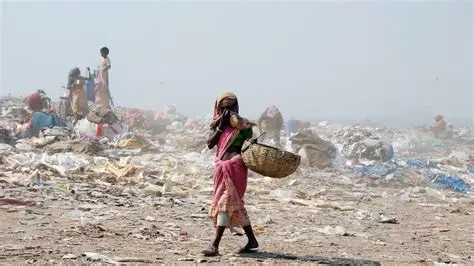
In its first comprehensive assessment since the COVID-19 pandemic, the World Bank has warned of the devastating impact of conflict and instability on 39 affected economies. These countries are experiencing extreme poverty rates rising faster than anywhere else, along with deepening food insecurity — threatening progress on key global development goals
The report’s analysis shows that as conflicts grow more frequent and intense in the 2020s, these economies are falling behind across nearly every development indicator. Since 2020, per capita GDP in conflict-affected states has shrunk by 1.8% annually, while other developing economies have grown by 2.9%. This year, 421 million people are living on less than $3 a day in conflict-affected or unstable economies — more than the rest of the world combined. The number is expected to climb to 435 million by 2030, representing nearly 60% of the world’s extreme poor
“Over the past three years, global attention has focused on conflicts in Ukraine and the Middle East — but more than 70% of those suffering from conflict and instability are in Africa,” said Indermit Gill, Chief Economist at the World Bank Group. “If left unaddressed, these conditions risk becoming chronic. Half of the countries facing conflict or fragility have been in this situation for 15 years or more. The resulting misery will inevitably spill over, with severe ripple effects
The report highlights why the global goal of ending extreme poverty remains out of reach: the world’s poorest populations are concentrated in places where development progress is hardest to achieve. Of the 39 economies classified as fragile or conflict-affected, 21 are experiencing active, ongoing conflicts
While extreme poverty has fallen to just 6% in developing countries overall, it remains near 40% in conflict-affected economies. Per capita GDP in these countries has stagnated at around $1,500 a year since 2010, compared to a doubling in other developing economies to an average of $6,900. Worse still, job creation has failed to keep pace with population growth: in 2022, out of 270 million working-age people in these economies, half were unemployed
“Recession, not growth, has been the dominant trend in conflict-affected economies for the past 15 years,” said Ayhan Kose, Deputy Chief Economist and Director of the World Bank’s Prospects Group. “Reviving growth will be difficult, but not impossible. With targeted policies, strong governance, and robust international support, governments can prevent conflict, strengthen institutions, accelerate growth, and create jobs
Over the past five years, the frequency and intensity of conflicts have tripled compared to the early 2000s, leaving a trail of development losses. Life expectancy in conflict-affected economies averages just 64 years — seven years below other developing countries. Infant mortality rates are more than twice as high, 18% of the population suffers from acute food insecurity (18 times the developing-world average), and 90% of school-age children fail to meet minimum reading standards
Research shows that once conflicts erupt, they tend to persist and intensify, with long-lasting economic damage. Severe conflicts — defined as those causing more than 150 deaths per million people — lead to a cumulative 20% drop in per capita GDP within five years
The World Bank stresses that conflict prevention offers one of the highest returns on investment. Early-warning systems that monitor risk in real time an trigger timely interventions, often at a fraction of the cost of post-conflict responses. Preventing conflict also reduces institutional “fragility” — the weak governance that undermines sustainable growth, peace, and justice
Despite the grim picture, the report highlights untapped potential. Natural resource wealth contributes more than 13% of GDP on average in these economies — triple the share in other developing countries — with countries like the Democratic Republic of Congo, Mozambique, and Zimbabwe holding key minerals critical for renewable energy technologies
Demographics also offer a long-term opportunity. While workforces are shrinking or stagnating elsewhere, the working-age population in conflict-affected economies will continue to grow, and by 2055 nearly two-thirds of the population will be of working age — the highest share globally. Realizing this “demographic dividend,” the report notes, will depend on greater investment in education, health, infrastructure, and building a dynamic private sector capable of generating better jobs


