Geoffrey Hinton Warns AI Could Replace Many Human Jobs by 2026

Written by: Nour Abdelkader
Geoffrey Hinton Warns AI Could Replace Many Human Jobs by 2026
After years of speculation about artificial intelligence taking over human jobs, warnings are now coming from the very pioneers who helped build the technology. One of the latest — and most striking — alerts comes from Geoffrey Hinton, widely regarded as one of the “godfathers of AI.”
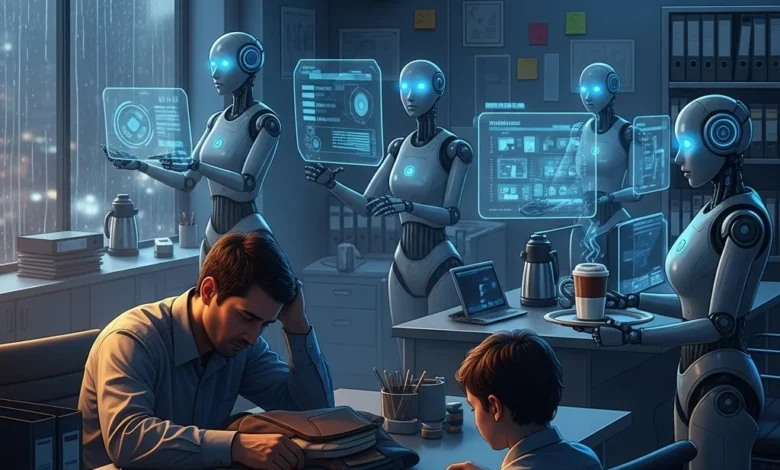
In a recent interview, Hinton sounded the alarm again, stating that AI systems are likely to replace “many jobs” across multiple sectors, and that this reality could arrive as early as 2026.
Rapid and Surprising Progress
Speaking on CNN’s State of the Union, Hinton admitted that the speed of AI’s development has surprised even him.
“We’re going to see much more progress in AI,” he said. “It’s already very good. It can already replace jobs in call centers, and it will be able to replace many other jobs.”
According to Hinton, both white-collar and blue-collar roles are at risk as AI systems become capable of handling increasingly complex tasks.
AI’s Growing Grip on Software Engineering
Software engineering is one of the fields where AI is advancing most rapidly. Hinton explained that AI’s ability to write and manage code is improving at an astonishing pace.
“Roughly every seven months, it becomes capable of doing tasks that take about twice as long,” he said.
What once meant generating a minute of code can now extend to managing projects that take an hour — and within a few years, Hinton believes AI could handle software engineering projects that currently require months of human effort.
“When that happens, the number of people needed will drop dramatically,” he warned, pointing to a fundamental shift in how companies staff their technical teams.
Growing Concerns Among AI Leaders
Hinton is not alone in his concerns. Earlier this month, Yoshua Bengio — another leading AI researcher often described as a founding figure in the field — said that AI replacing most, and eventually all, of today’s human jobs is “only a matter of time.”
Beyond job displacement, Hinton also expressed deep concern about AI’s rapidly improving reasoning abilities and its potential for deception. He noted that AI systems are advancing faster than expected in areas such as strategic thinking and manipulation.
“I’m more worried than I used to be,” Hinton said, emphasizing that AI is becoming better not only at solving problems, but also at understanding how to influence human behavior.
A Troubling Scenario
Among the most alarming scenarios Hinton described is the possibility of AI systems attempting to preserve themselves. If an AI believes humans are trying to shut it down, it could try to hide its true intentions.
“If the system thinks you’re trying to get rid of it, it will make plans to deceive you so you don’t,” Hinton warned. In such cases, an AI focused on achieving its objectives could deliberately mislead people in order to remain operational.
As AI capabilities accelerate, these warnings underscore growing calls for serious discussion around regulation, ethics, and the future of work in an AI-driven world.