“An American-Made Peace”: The End of a War, or the Start of a New Kind of Occupation

By Mohamed El-Sherif – October 13, 2025
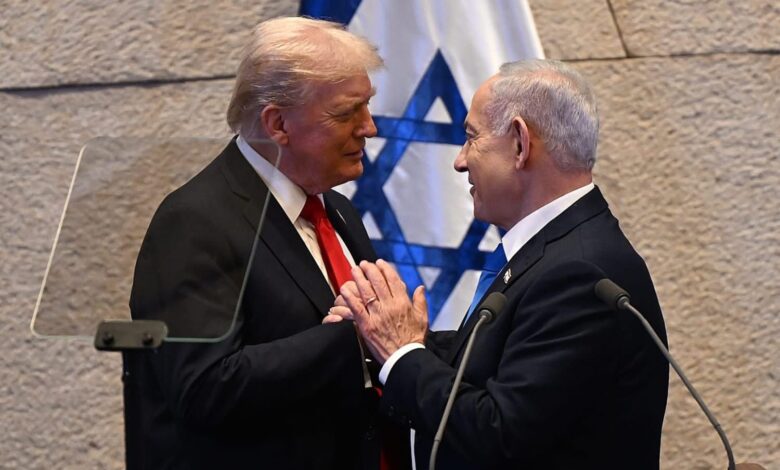
In a celebratory session at the Israeli Knesset, former U.S. President Donald Trump delivered what many observers called his most comprehensive speech since the Gaza war began.
Declaring that “the era of wars is over” and that “the Middle East begins today a new age of peace and security,” Trump spoke to a chamber filled with applause and admiration from Israeli leaders.
From “The Dawn of the Middle East” to “Peace Through Power”

The half-hour speech touched on multiple themes, which Trump framed as “a historic dawn for the future of the Middle East.” He thanked Arab and Muslim nations for their “commitment to the safe reconstruction of Gaza” and asserted that Israel, the United States, and the wider region “will be more secure than ever before.”
“We have achieved the impossible peace and brought the hostages home,” Trump declared, adding that the region had “fully agreed on a plan to disarm Hamas.” He went on to say, “Israel’s security will never again be in jeopardy.”

Turning to Lebanon, Trump claimed that “Hezbollah has been completely destroyed,” and voiced support for “a disarmament process that allows Lebanon to live in peace with its neighbors.”
He also addressed Iran, saying the country had “suffered a crippling blow,” and expressed hope for “a peace agreement with the Iranians.” He concluded: “We will enforce peace through strength. We have weapons no one has ever dreamed of, and I hope we never have to use them. I don’t like wars — but I seem to be good at ending them.”

Applause and Dissent Inside the Knesset
The speech was met with a mix of enthusiasm and protest.
Arab-Israeli lawmakers Ayman Odeh and Ofer Cassif interrupted the session, holding up signs reading “Recognize Palestine” before being escorted out by security.
Prime Minister Benjamin Netanyahu praised Trump, saying, “You’re the first person I’d nominate for the Israel Prize.”
Opposition leader Yair Lapid also lauded the address, claiming Trump had “saved millions of civilian lives and has the power to lead the next wave of peace.”
Israeli media described the speech as “historic” and “the crowning moment of both military and political victory.”
Peace or Power Politics
Despite its optimistic tone, Trump’s speech reflected a new vision of peace — one built on military might and political dominance. While he spoke of reconstruction, his references focused on Arab commitments, with little mention of any reciprocal Israeli obligations. Analysts viewed this as a shift in Washington’s role — from mediator to manager of the regional order.
Though framed as a declaration of peace, Trump’s message appeared more like a roadmap for a reshaped balance of power — one where Israeli security becomes the foundation of any future settlement

“Peace Through Strength”… or a Softer Form of Control
Trump’s address marked a turning point between war and peace: words that called for calm, yet outlined a model of peace enforced by American power and financed with Arab capital.
For many in the Arab world, the lingering question is clear:
Is this the long-awaited peace — or the beginning of a new kind of occupation in diplomatic disguise?